
You can eat a genuinely healthy diet and still feel exhausted, foggy, and nutrient-depleted. The reason is that gut health and nutrient absorption are inseparable. Your digestive system is not a passive tube; it is a living ecosystem where trillions of microbes, specialised cells, and enzymes work together to extract and deliver nutrients to your body. When that ecosystem is out of balance, even the most carefully chosen foods may not be doing what you expect. Understanding what actually drives absorption gives you real leverage over your energy, immunity, and long-term health.
Table of Contents
Key takeaways
| Point | Details |
|---|---|
| Gut microbes drive absorption | Diverse gut bacteria break down complex foods and synthesise vitamins your body cannot produce alone. |
| Diet predicts microbiome quality | Diet shapes 92.4% of microbial species, so food choices directly affect how well you absorb nutrients. |
| Chewing matters more than you think | Thorough chewing increases food surface area for enzyme action, improving uptake before food even reaches the intestine. |
| Timing affects supplement benefit | Drinking tea or coffee near mineral supplements reduces iron absorption by up to 60%, so timing is critical. |
| Gradual changes outperform fast fixes | Sudden fibre or probiotic increases cause bloating; slow, consistent changes allow your microbiome to adapt and function better. |
How gut health shapes nutrient absorption
The small intestine is where most absorption actually happens. It is divided into three sections: the duodenum, which handles the earliest stages of digestion and receives bile and pancreatic enzymes; the jejunum, where the bulk of carbohydrates, proteins, and fats are absorbed; and the ileum, which specialises in vitamin B12 and bile salt recapture.
The cells doing this work are called enterocytes. These specialised absorptive cells line the intestinal wall in finger-like projections called villi, each covered in microscopic microvilli that create an enormous surface area. Alongside them, goblet cells secrete protective mucus and enteroendocrine cells release hormones that regulate digestion and immune activity.
Nutrients cross the intestinal wall by two main routes. Transcellular transport moves nutrients directly through enterocyte membranes using specialised carriers or channels. Paracellular transport squeezes small molecules between cells through tight junctions. Both routes depend on the gut lining remaining intact and well-supported.
Once absorbed, nutrients enter the bloodstream or the lymphatic system depending on their type. Water-soluble vitamins and minerals go straight to the blood. Fats and fat-soluble vitamins travel via the lymphatic system before joining circulation.
Common causes of impaired absorption include:
-
Malabsorption syndromes such as coeliac disease, Crohn’s disease, and pancreatic insufficiency
-
Damaged or inflamed gut lining reducing functional surface area
-
Enzyme deficiencies preventing proper breakdown of food
-
Disrupted gut microbiome weakening the supportive environment around enterocytes
-
Rapid intestinal transit leaving insufficient time for uptake
| Nutrient | Primary absorption site | Key requirement |
|---|---|---|
| Iron | Duodenum | Low pH, vitamin C present |
| Calcium | Duodenum, jejunum | Vitamin D, healthy mucosa |
| Vitamin B12 | Ileum | Intrinsic factor from stomach |
| Fats and fat-soluble vitamins | Jejunum | Bile salts, intact lymphatics |
| Short-chain fatty acids | Colon | Active gut microbiome |
The gut microbiome’s role in digestion
Your gut microbiome is not just a bystander. It is an active participant in digestion, synthesising nutrients, protecting the intestinal lining, and regulating your immune system.

Gut bacteria ferment dietary fibre and polyphenols that your own enzymes cannot break down. This fermentation produces short-chain fatty acids like butyrate, propionate, and acetate. These metabolites support the gut lining and reduce inflammation, creating conditions where nutrient absorption can thrive.
Your microbes also synthesise vitamins you cannot make yourself. B vitamins including B1, B2, B6, B9, and B12 analogues, as well as vitamin K2, are produced by healthy gut bacteria. A disrupted microbiome can quietly reduce these contributions, leading to deficiencies that seem puzzling on a good diet.
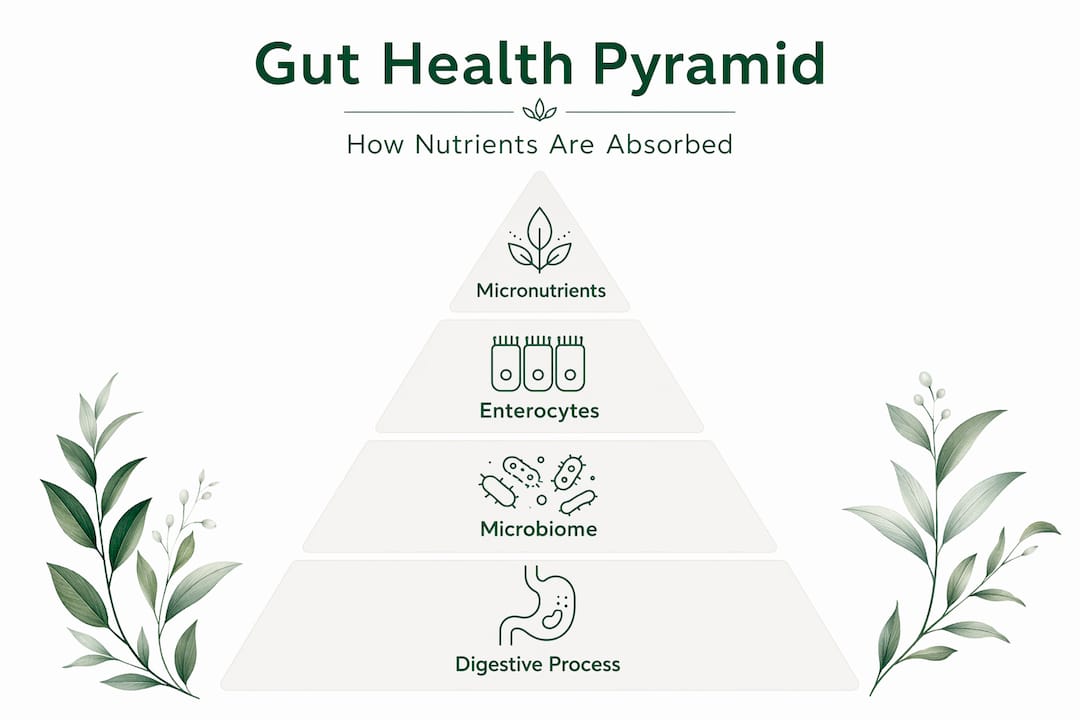
Microbial diversity is the key metric here. A greater variety of species correlates with a more resilient gut lining, lower inflammatory markers, and better metabolic function. When diversity drops due to poor diet, antibiotics, or chronic stress, the condition is called dysbiosis. Poor diet starves beneficial bacteria, damages the mucus layer, and creates gaps in the gut lining that allow partially digested particles and bacteria to trigger immune responses.
The connection does not stop at digestion. Up to 90% of the body’s serotonin is produced in the gut, and gut bacteria regulate GABA production, both of which indirectly influence mood and anxiety. This is why chronic digestive issues can accompany low energy, poor sleep, and mental health struggles. The gut-brain axis is real, and it runs through your microbiome.
“The health of your gut microbiome determines not just what you digest, but how well your whole body functions, from energy metabolism to emotional resilience.”
Practical strategies to improve absorption
The good news is that improving your gut microbiome is achievable through specific, consistent habits. Here is a research-grounded approach that works in practice.
-
Eat 30 different plants each week. Researchers recommend this target for optimal gut diversity. Plants include vegetables, fruits, legumes, wholegrains, nuts, seeds, and herbs. Each variety feeds different microbial species, building the diversity your gut needs.
-
Add fermented foods gradually. Yoghurt, kefir, kimchi, sauerkraut, and miso introduce live bacteria into your gut. Start with small portions, about two to three tablespoons daily, and increase over two to three weeks to avoid bloating as your microbiome adjusts.
-
Chew your food thoroughly. Thorough chewing dramatically increases the surface area exposed to enzymes like salivary amylase and later pancreatic lipase and protease. Aim for 20 to 30 chews per mouthful for dense foods. It sounds tedious until you notice the difference in how you feel after meals.
-
Drink enough water consistently. Experts recommend approximately 2.5 to 3 litres per day for adults. Water supports mucus production in the gut, helps soluble fibre dissolve properly, and assists in moving nutrients across the intestinal wall.
-
Prioritise seven to nine hours of sleep. Sleep is when the gut repairs itself. Chronic sleep deprivation measurably shifts microbiome composition toward less beneficial species within days.
-
Manage stress actively. Chronic stress raises cortisol, which increases intestinal permeability and reduces enzyme secretion. Even short daily practices like walking, breathing exercises, or mindfulness protect gut function over time.
-
Be cautious with antibiotics. Antibiotic overuse reduces microbiota diversity by up to 30%, and recovery can take months or years. When antibiotics are medically necessary, taking a targeted probiotic alongside them reduces antibiotic-associated diarrhoea by 37%.
Pro Tip: Eat the bulk of your prebiotic foods, like garlic, onion, leeks, and green banana, at dinner rather than breakfast. Your gut bacteria are most metabolically active overnight, so timing your fibre strategically can amplify the fermentation benefits.
Pitfalls that quietly undermine your gut
Many people do everything “right” on paper but still struggle. These are the less obvious factors that get in the way.
Supplement timing mistakes are extremely common. Tannins and polyphenols in tea and coffee bind to minerals like iron, calcium, magnesium, and zinc, reducing their availability. Research confirms tannins can cut iron absorption by up to 60%. The practical fix is to leave a gap of at least one to two hours between your morning coffee and any mineral supplements.
Generic probiotics without strategy is another trap. Probiotic use should be tailored to your physiology and circumstances. Taking a random off-the-shelf probiotic when you actually need a specific strain does little. Lactobacillus rhamnosus GG, for instance, has strong evidence for antibiotic recovery, while different strains are better suited to irritable bowel syndrome. Understanding what you need before buying matters.
Abrupt increases in fibre or probiotics cause the bloating and gas that make people abandon good habits. Gradual introduction allows the microbiome to adapt without distress. Start with one new food or supplement at a time, increase serving sizes over two to three weeks, and track symptoms.
Subtle early warning signs often appear long before obvious gastrointestinal disease. Fatigue and new food sensitivities are among the earliest signals of dysbiosis. Many people attribute low energy or brain fog to stress or poor sleep, when the actual driver is compromised absorption.
| Common pitfall | Why it happens | Practical fix |
|---|---|---|
| Coffee with supplements | Tannins reduce mineral absorption | Wait 1 to 2 hours after coffee before taking minerals |
| Wrong probiotic strain | Strains have specific effects | Choose evidence-based strains for your condition |
| Too much fibre too fast | Microbiome needs time to adapt | Increase intake by 5g per week maximum |
| Ignoring early fatigue | Dysbiosis precedes obvious symptoms | Track energy and digestion together |
My honest take on gut health advice
I’ve been working in this space long enough to notice a pattern. Most people who come to me frustrated with their digestion have actually tried plenty of things. They have bought the probiotic, cut out gluten, and drunk their two litres of water. What they have usually not done is slow down.
The biggest overlooked factor I keep coming back to is chewing. It sounds embarrassingly simple, but the amount of people who inhale their meals while looking at a screen and then wonder why their gut cannot cope is striking. Mechanical digestion is the foundation. You cannot supplement your way past a five-chew lunch.
I also think the “more is better” mentality around probiotics and fibre causes a lot of unnecessary suffering. I’ve seen patients push through weeks of bloating because they read that discomfort is normal during gut healing. Sometimes it is. But often it is just a signal to back off and go slower. Gradual adaptation is not a compromise. It is the correct approach.
What actually works, in my experience, is picking two or three strategies that genuinely fit your life and doing them consistently for three months. A plant-rich diet with variety, proper meal pacing, and targeted support when genuinely needed. The people who see lasting improvement are not the ones chasing the newest supplement. They are the ones who build unglamorous daily habits and stick with them.
— Annie
How Evergreendoctors can help you absorb more from your food
If you have been managing digestive symptoms or unexplained fatigue for a while without clear answers, a functional medicine assessment may be the missing piece.
Evergreendoctors uses a functional medicine approach that looks at the root causes of poor absorption rather than just treating symptoms. Their practitioners assess your gut microbiome health, nutrient status, diet, and lifestyle together to create a personalised plan. Whether you are in Sydney, Newcastle, or elsewhere in Australia, you can access specialist care through in-clinic or telehealth consultations from anywhere in the country. If persistent digestive symptoms or nutrient gaps are affecting your quality of life, this is a practical and accessible next step.
FAQ
What are the main signs of poor gut health affecting absorption?
Fatigue, new food sensitivities, brain fog, and bloating after meals are common early signs. These often appear before any formal gastrointestinal diagnosis is made.
How do probiotics help with nutrient absorption?
Probiotics support the gut lining, restore microbial diversity, and reduce inflammation, all of which improve the conditions needed for absorption. They also synthesise some B vitamins directly. Using strain-specific probiotics rather than generic formulas produces better outcomes.
Does drinking coffee really reduce mineral absorption?
Yes. Tannins in tea and coffee reduce iron absorption by up to 60% and also affect calcium, magnesium, and zinc. Leave a gap of at least one to two hours between caffeinated drinks and mineral supplements.
How quickly can diet improve gut microbiome diversity?
Diet impacts 92.4% of microbial species, and measurable changes can occur within days of dietary shifts. Sustained improvement requires consistent long-term dietary habits rather than short-term interventions.
What foods are best for supporting gut health and absorption?
A diverse range of plants, including vegetables, legumes, wholegrains, fermented foods, and fibre-rich fruits, feed the beneficial bacteria that support gut lining integrity and nutrient uptake. Aiming for 30 different plant varieties per week is a practical target backed by current research.