
Trying to find a qualified functional medicine practitioner in Australia can feel like searching for a needle in a haystack. You know you want someone who looks beyond your symptoms and actually investigates why you feel the way you do. But the market is full of practitioners with varying levels of training, wildly different approaches, and credentials that can be difficult to verify. This guide cuts through that noise. You will learn exactly what qualifications to look for, what to expect during consultations, how to search effectively, and which red flags should send you walking out the door.
Table of Contents
Key takeaways
| Point | Details |
|---|---|
| Verify credentials independently | Check practitioner licences via Australian state medical boards, not just their own marketing materials. |
| Use accredited directories first | Directories from organisations like IFM and AAOPM are safer starting points than general search engines. |
| Expect a thorough intake process | A reputable practitioner will include a discovery call, detailed health history, and advanced lab testing. |
| Know the red flags | Cure guarantees, opaque fees, and skipped patient history are warning signs of poor-quality care. |
| Telehealth expands your options | Virtual consultations let you access qualified practitioners beyond your immediate geographic area. |
Finding a qualified functional medicine practitioner: credentials first
Before you book a consultation, you need to understand what qualifications actually mean in this space. Functional medicine is not a regulated profession in the same way that conventional medicine is. Anyone can technically call themselves a “functional medicine practitioner,” which makes credential verification non-negotiable.
Medical licence types and why they matter
Functional medicine practitioners are typically licensed clinicians, such as medical doctors (MDs), osteopathic doctors (DOs), or naturopathic doctors (NDs), who then layer additional functional medicine training on top of their foundational qualifications. In Australia, the relevant base qualifications include MBBS or MD registration with the Medical Board of Australia, or registration as a naturopath through the Australian Health Practitioner Regulation Agency (AHPRA). The base licence matters because it determines the scope of practice. An MD can order pathology tests and prescribe medications; a naturopath cannot. Neither is inherently better, but you need to know which type of care you require.
Recognised functional medicine certifications
Beyond base licences, look for certifications that signal dedicated functional medicine training:
-
IFMCP (Institute for Functional Medicine Certified Practitioner): The IFMCP credential is widely recognised as a rigorous benchmark, requiring completion of the IFM’s Applied Clinical Training programme and a competency examination. It should always be considered alongside the practitioner’s base licence and clinical scope.
-
Board certifications in related specialties: Certifications in internal medicine, endocrinology, or gastroenterology alongside functional medicine training indicate a practitioner with broad diagnostic depth.
You can verify credentials independently through AHPRA’s public register for Australian-registered practitioners. Simply search the practitioner’s name and confirm their registration status, any conditions on their licence, and their declared specialty area. This step takes five minutes and is worth every second.
Pro Tip: Ask the practitioner directly which functional medicine training programmes they have completed and request the name of the certifying body. A confident, transparent answer is a good sign. Hesitation or vague answers are not.
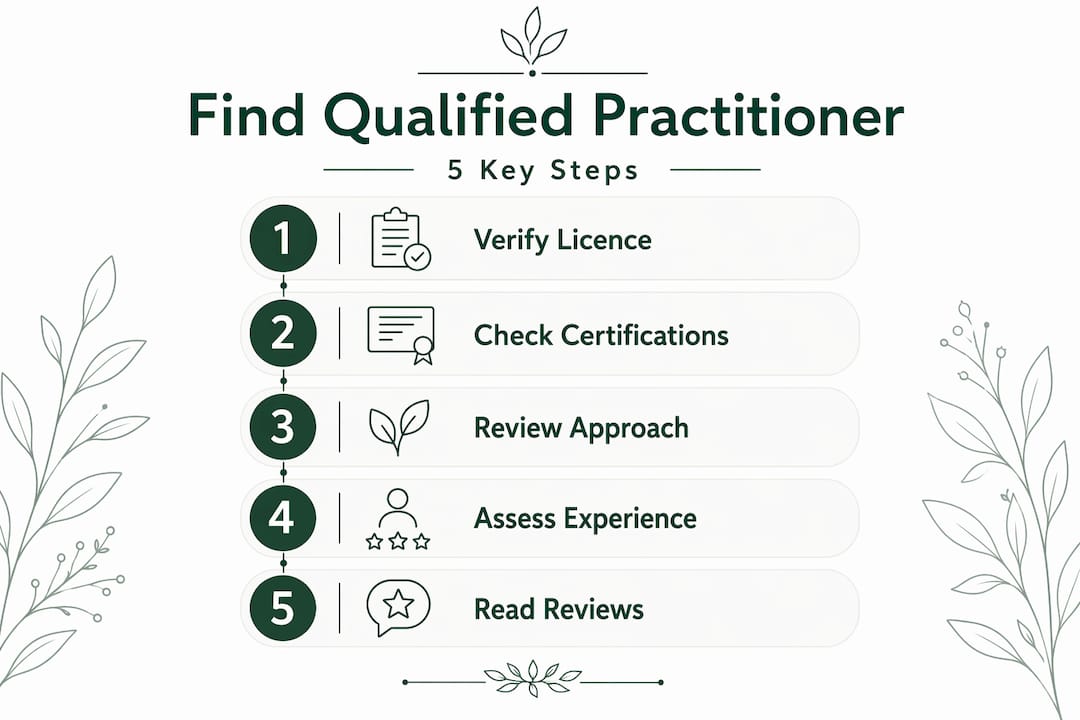
It is worth noting that credentials alone are necessary but not sufficient. A practitioner can hold every certificate available and still deliver poor care if they do not listen, personalise their approach, or integrate evidence thoughtfully. Credentials open the door. Your consultation experience tells you whether to walk through it.
What to expect during consultations
One of the clearest ways to distinguish a genuinely skilled functional medicine specialist from someone simply using the label is the depth of their intake process. Conventional GP appointments run for 10 to 15 minutes. A proper functional medicine consultation looks nothing like that.

A typical functional medicine intake includes a discovery call, a comprehensive health history session, and advanced laboratory testing that goes well beyond standard blood panels. The discovery call, often 15 minutes, helps both parties assess fit before committing to a full consultation. The comprehensive history session can run 60 to 90 minutes and covers everything from childhood illnesses and environmental exposures to sleep patterns, stress levels, dietary habits, and family history. This is where the “why behind your symptoms” work actually begins.
Advanced testing commonly used in functional medicine includes:
-
Comprehensive thyroid panels covering TSH, free T3, free T4, and thyroid antibodies, rather than TSH alone.
-
Organic acids testing to assess mitochondrial function, gut bacteria metabolites, and nutrient deficiencies.
-
Comprehensive stool analysis examining the gut microbiome, digestive enzyme activity, and inflammatory markers.
-
Hormone panels including cortisol rhythms via saliva or urine, not just a single morning serum reading.
-
Advanced cardiovascular markers such as homocysteine, Lp(a), and oxidised LDL beyond a standard lipid panel.
Ongoing monitoring is just as telling as the initial intake. A practitioner who orders tests once and never reviews results against your symptoms is not practising functional medicine. They are practising expensive guesswork. Expect regular follow-up appointments, protocol adjustments based on your response, and clear outcome tracking.
Pro Tip: Before your first consultation, write a detailed timeline of your health history: when symptoms started, what made them better or worse, and every treatment you have tried. Practitioners who ask for this upfront are the ones worth your time.
Questions to ask a functional practitioner
Asking the right questions during your initial call tells you a great deal about how a practitioner thinks. Try these:
-
“What does your typical initial consultation process look like, and how long does it take?”
-
“How do you integrate conventional medicine with your functional approach?”
-
“Can you walk me through how you would approach a patient with my primary concern?”
-
“How do you measure treatment progress, and at what intervals do you review my plan?”
The answers reveal whether the practitioner is genuinely systems-focused or simply repackaging standard advice with a functional medicine label.
Where to search: directories, telehealth, and local options
Knowing where to look is half the battle. General Google searches for “functional medicine near me” will surface a mix of genuinely qualified practitioners and wellness coaches with weekend certificates. You need more targeted search strategies.
Accredited training organisation directories are the safest starting point. The IFM’s Find a Practitioner tool and the A4M directory list practitioners who have completed recognised training programmes. These are not perfect filters, but they are far more reliable than general search results.
This brings us to telehealth. Virtual consultations and at-home lab testing options have made it genuinely practical to access qualified functional medicine care regardless of your postcode. If you are in regional Queensland or rural New South Wales, telehealth is not a compromise. It is often the most practical path to quality care. You can explore functional medicine telehealth options as a starting point if in-person access is limited.
| Search method | Best for | Limitation |
|---|---|---|
| IFM Find a Practitioner | Locating IFMCP-certified practitioners globally | |
| A4M | Longevity and anti ageing doctors globally | |
| AHPRA public register | Verifying Australian medical and allied health licences | Does not confirm functional medicine training |
| Google Business profiles | Reading patient reviews and assessing communication | Reviews can be curated; credentials unverified |
When reviewing Google Business profiles and patient reviews, look for patterns rather than individual comments. Consistent mentions of thorough intake processes, good follow-through, and clear communication are meaningful signals. A single glowing review from three years ago is not.
Red flags to avoid when choosing a practitioner
Not every practitioner who uses the words “functional medicine” deserves your trust or your money. Watch for these warning signs:
-
Cure guarantees. Ethical practitioners never guarantee cures. They set realistic expectations and explain the evidence behind their recommendations.
-
Unverifiable credentials. If a practitioner cannot or will not point you to a certifying body you can independently verify, that is a serious concern.
-
Rushed or skipped patient history. Skipping a detailed health history is not a time-saving measure. It is a sign the practitioner is not actually doing functional medicine.
-
Dismissal of conventional medicine. Functional medicine works best when it integrates with, not replaces, evidence-based conventional care. Blanket dismissal of medications or specialist referrals is a red flag.
-
Pressure to purchase supplements or expensive tests upfront. Opaque fee structures and pressure to buy proprietary supplement protocols before a diagnosis is established are ethically questionable practices.
“A practitioner who listens more than they talk in your first consultation is worth far more than one who arrives with a pre-packaged protocol.”
Making your final decision
Once you have narrowed your list to two or three candidates, the final vetting happens through direct interaction. Prepare for your initial call with specific questions about their process. Assess whether they explain their reasoning clearly, invite your input, and treat you as a partner in your own care rather than a passive recipient of their expertise.
Track your own symptoms and energy levels from the moment you begin a treatment protocol. A good practitioner will ask you to do this anyway, but keeping your own records gives you an independent measure of progress. If you are three months into a plan and nothing has shifted, that is a conversation worth having. If the practitioner dismisses your concern, it is time for a second opinion.
Pro Tip: Keep a simple weekly symptom diary in a notes app on your phone. Rate key symptoms on a scale of one to ten each week. This gives you objective data to bring to follow-up appointments and helps both you and your practitioner see trends that memory alone would miss.
Understanding the difference between practitioners is also worth your time. The distinction between functional and integrative doctors affects the type of care you will receive, and knowing it upfront helps you ask sharper questions.
My honest take on finding the right practitioner
I have seen a lot of patients arrive at functional medicine after years of being told their test results are “normal” while they feel anything but. The frustration is real, and it makes people vulnerable to practitioners who use the right language without having the right skills.
What I have learned is this: credential verification and clinical approach are both non-negotiable, and you cannot trade one for the other. I have met practitioners with impressive certificates who treat every patient with the same gut-protocol template. I have also met deeply knowledgeable clinicians whose paperwork was harder to track down. The best practitioners combine verifiable training with genuine curiosity about your individual case.
Telehealth has changed the game significantly for Australians outside Sydney, Melbourne, or Brisbane. The idea that you need to live near a major city to access quality functional medicine is no longer true. What matters is finding someone whose credentials check out, whose process is thorough, and who communicates clearly. Geography is increasingly the least of your concerns.
The hardest part is not the search. It is trusting yourself enough to walk away from a practitioner who does not feel right, even if they have the right letters after their name. Your instincts about whether someone is genuinely listening to you are worth acting on.
— Annie
Ready to connect with a verified practitioner?
If you have done the research and are ready to take the next step, Evergreendoctors makes it straightforward to connect with qualified, credentialled functional medicine practitioners across Australia.
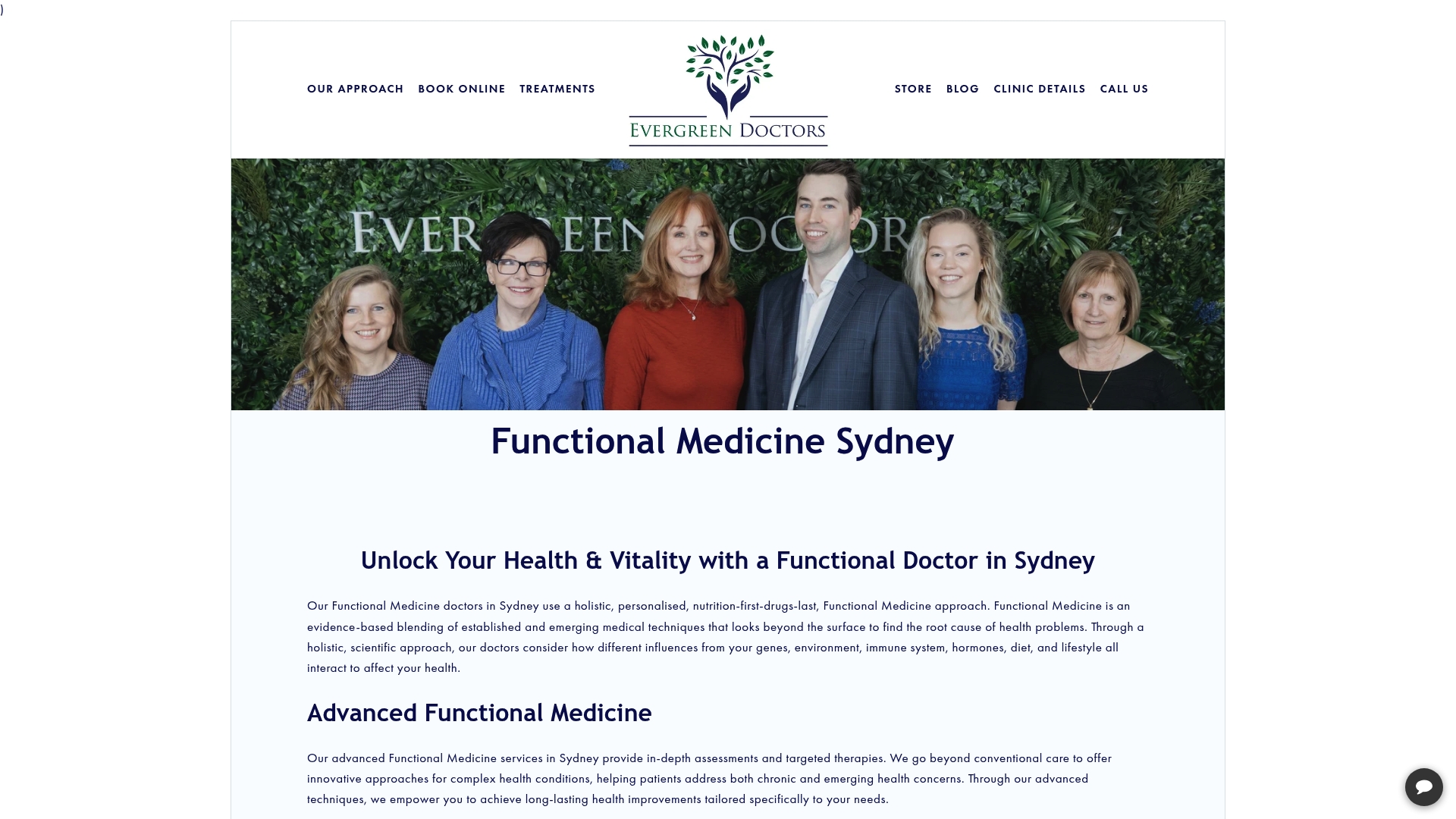
Whether you are in Sydney, Newcastle, Melbourne, or the Sunshine Coast, Evergreendoctors offers both in-person and telehealth consultations with practitioners who follow a rigorous, root-cause approach to chronic conditions, hormonal imbalances, and metabolic health. Every practitioner on the Evergreendoctors platform has verifiable credentials and follows a thorough intake process, including comprehensive health history and advanced diagnostic testing. Explore functional medicine in Sydney to get started, or check out the Newcastle practice and Sunshine Coast location if you are based outside Sydney. Telehealth appointments are also available nationally through Evergreendoctors telehealth.
FAQ
How do I verify a functional medicine practitioner’s credentials in Australia?
Search the practitioner’s name on the AHPRA public register to confirm their base medical or allied health licence. Then ask them directly which functional medicine training programmes they have completed and verify those with the certifying organisation, such as IFM.
What is the IFMCP and does it matter?
The IFMCP (Institute for Functional Medicine Certified Practitioner) is a recognised certification that requires completion of applied clinical training and a competency exam. It is a meaningful credential, but it should be evaluated alongside the practitioner’s base medical licence and clinical experience.
Can I access functional medicine services via telehealth in Australia?
Yes. Telehealth expands access to qualified functional medicine care for patients in regional or underserved areas, with at-home lab testing options available to support virtual consultations. The same credential verification standards apply regardless of whether care is delivered in person or online.
What questions should I ask a functional medicine practitioner before booking?
Ask about their intake process, how they integrate conventional medicine, how they measure treatment progress, and which certifying bodies issued their functional medicine credentials. A practitioner who answers these questions clearly and without defensiveness is worth considering.
How long does a functional medicine consultation typically take?
Initial consultations typically run 60 to 90 minutes and include a detailed health history. Many practitioners also offer a discovery call beforehand. This depth is what separates genuine functional medicine services from a standard GP appointment.