
If you have tried generic dietary advice for a chronic health condition and found it falling short, you are not alone. Precision nutrition functional medicine examples reveal why a one-size-fits-all approach consistently underperforms. Rather than issuing blanket recommendations, functional medicine practitioners use detailed health histories, genomic data, and advanced biomarker testing to build personalised nutrition strategies that target the root cause of your symptoms. The four examples below move from concept to clinic, showing exactly how these personalised approaches work in practice.
Table of Contents
-
2. Multi-omics personalised dietary advice for metabolic health
-
Work with Evergreen Doctors on your personalised nutrition plan
Key takeaways
| Point | Details |
|---|---|
| Genomics guides targeted intervention | Genomic profiling combined with functional labs can resolve complex postmenopausal symptoms within six months. |
| Multi-omics outperforms generic advice | Personalised dietary programmes using phenotype and biomarker data produce measurably better metabolic outcomes than standard guidelines. |
| Sequencing matters as much as content | Addressing foundations like blood sugar and gut barrier before advanced protocols prevents symptom flares and improves tolerance. |
| AI accelerates personalised care | AI pattern recognition in functional medicine enables earlier risk detection and more precise, individualised care planning. |
| Food is a systemic signal | Functional nutrition treats food as information that modulates inflammation, hormone signalling, and gut function simultaneously. |
1. Genomics-informed nutrition for postmenopausal health
Postmenopause brings a cluster of symptoms that standard advice routinely fails to address: persistent hot flushes, joint discomfort, disrupted sleep, and unexplained weight changes. A precision nutrition approach changes the starting point entirely. Instead of beginning with a food plan, the practitioner begins with data.
In this example, a comprehensive genomic profile is run alongside functional lab panels covering methylation markers, detox enzyme activity, cortisol rhythm, and oestrogen metabolite ratios. The results reveal specific single nucleotide polymorphisms (SNPs) affecting the MTHFR and COMT genes, which govern how the body processes folate and oestrogen respectively. These findings then drive every dietary and nutraceutical decision that follows.
The resulting plan typically unfolds in three phases:
-
Phase 1 (weeks 1 to 6): Stabilise blood sugar and support methylation with folate-rich whole foods, B12, and magnesium glycinate
-
Phase 2 (weeks 7 to 14): Introduce targeted phytoestrogens, sulforaphane from cruciferous vegetables, and diindolylmethane (DIM) to support oestrogen detoxification
-
Phase 3 (weeks 15 to 24): Reassess biomarkers and adjust supplement stack; introduce restorative movement and sleep hygiene protocols
Genomic profiling with functional testing has demonstrated resolution of chronic vasomotor symptoms and musculoskeletal discomfort within six months using exactly this phased, precision approach. The outcomes go beyond symptom relief. Biomarkers improve, and patients report measurable gains in quality of life.
Pro Tip: If you carry COMT variants, even healthy foods like green tea and flaxseed may require careful timing. A practitioner trained in nutrigenomics will assess this before building your plan.
2. Multi-omics personalised dietary advice for metabolic health
Generic dietary guidelines are built for the average person. The problem is that no patient is average. This example draws on multi-omics data, which integrates genomics, metabolomics, and gut microbiome analysis to create a dietary prescription specific to your metabolic phenotype.
A person with insulin-resistant phenotype A will respond differently to a high-fibre diet than a person with phenotype B who carries variants affecting lipid metabolism. Standard advice cannot account for this. Multi-omics precision nutrition delivers statistically superior outcomes in weight, BMI, HbA1c, and liver function markers compared to generic dietary advice at six-month follow-up.
The clinical implications are significant:
-
HbA1c reductions are larger and more sustained when dietary carbohydrate composition is matched to individual insulin response patterns
-
Liver function parameters improve faster when fat quality, not just quantity, is tailored to hepatic metabolic markers
-
Tailored diets by insulin resistance type produce meaningful gains in insulin sensitivity and cardiometabolic markers beyond what weight loss alone achieves
| Marker | Standard dietary advice | Multi-omics personalised diet |
|---|---|---|
| HbA1c reduction | Modest | Statistically significant |
| BMI change at 6 months | Moderate | Greater with phenotype matching |
| Liver enzyme normalisation | Variable | Faster with targeted fat quality |
| Patient adherence | Often declines at 3 months | Higher with personalised rationale |
The patient engagement factor matters here. When you understand why your plan is built the way it is, adherence rises. That is one of the underrated advantages of this approach over generic dietary guidelines.

3. Functional medicine and root cause dietary intervention
The structural difference between functional medicine and conventional care becomes most visible at the intake stage. A functional medicine consultation does not begin with your presenting symptom. It begins with your life. Functional medicine practitioners conduct comprehensive initial consultations covering lifestyle history, environmental exposures, stress patterns, relationship dynamics, and dietary history to identify root causes that extend well beyond symptom management.
Functional nutrition treats food as systemic information that modulates inflammation, stabilises blood sugar, balances hormones, and repairs gut function. This framing changes what a “diet plan” actually looks like in practice. Common functional medicine diet examples include:
-
Elimination and reintroduction protocol for identifying food triggers driving inflammation or gut permeability
-
Autoimmune protocol (AIP) diet focused on removing immunogenic foods while rebuilding nutrient density
-
Low-glycaemic, anti-inflammatory whole food plan for metabolic and hormonal conditions
-
Therapeutic low-FODMAP diet sequenced within a gut restoration programme for IBS and dysbiosis
-
Mitochondrial support diet prioritising CoQ10-rich foods, B vitamins, and antioxidants for fatigue-driven presentations
Each of these functions as a temporary diagnostic and therapeutic phase. Elimination diets in functional medicine are not designed as lifelong restrictions. They calm inflammation and identify triggers, then transition into a broader, sustainable eating pattern once clarity is achieved.
Pro Tip: The sequence of these dietary phases matters as much as the phases themselves. Addressing blood sugar stability and hydration before initiating an elimination diet dramatically improves patient tolerance and reduces the risk of detox reactions.
4. AI-assisted protocol development in functional medicine
Artificial intelligence is changing how functional medicine practitioners handle complex, multi-variable patient data. The use case is not replacing clinical judgement. It is amplifying it.
In this example, a patient presents with fatigue, weight gain, brain fog, and recurring gut issues. Their intake form spans eight pages. Their labs cover 40 biomarkers. Their genomic report flags 12 clinically relevant SNPs. No practitioner can synthesise this at consultation speed without support. This is where AI earns its place.
AI tools in functional medicine analyse intake forms, recognise patterns across nutrigenomic and metabolic data, and generate personalised protocol frameworks based on current research. The practical benefits include:
-
Pre-visit summaries that prepare practitioners to ask deeper questions rather than administrative ones
-
Pattern recognition across symptom clusters that flag likely root causes before the first consultation
-
Customised care plan drafts drawing from nutrigenomics databases and integrative medicine research
-
Predictive risk modelling that identifies patients trending toward metabolic syndrome or cardiovascular risk earlier than traditional diagnostics would detect
The most honest framing of AI here is administrative relief and pattern recognition, not diagnosis. This frees practitioners to spend more time in genuine therapeutic dialogue. The shift toward proactive health optimisation that AI enables is one of the more meaningful developments in personalised medicine right now. For patients, the outcome is a more thorough, coherent plan delivered faster.
You can read more about how digital tools are shaping patient care in Evergreen Doctors’ piece on telehealth and functional medicine.
5. Comparative overview of precision nutrition approaches
Understanding the differences between these four examples helps you assess which approach fits your situation. The table below maps each example across key dimensions.
| Approach | Primary data inputs | Target outcomes | Accessibility | Best suited for |
|---|---|---|---|---|
| Genomics-informed nutrition | SNP panels, functional labs | Symptom resolution, hormone balance | Specialist referral needed | Postmenopause, methylation issues |
| Multi-omics dietary advice | Metabolomics, microbiome, genomics | Metabolic markers, cardiometabolic health | Growing clinical availability | Insulin resistance, liver health |
| Functional medicine root cause | Comprehensive patient history, elimination diets | Root cause resolution, gut health | Broadly accessible | Chronic illness, gut disorders |
| AI-assisted protocol development | All data types plus AI synthesis | Efficiency, early risk detection | Emerging in specialist clinics | Complex, multi-system presentations |
The right starting point depends on two things: the complexity of your presentation and the depth of data you are willing to gather. A straightforward functional medicine intake and targeted elimination diet may resolve your symptoms without any genomic testing. For more complex or treatment-resistant cases, layering in genomics and AI synthesis is where outcomes improve most significantly.
Functional medicine practitioners excel by sequencing protocols based on patient response rather than rigid algorithmic matches, which is why the clinician relationship remains central regardless of which approach you choose. If you are looking for a longevity-oriented framework that integrates many of these strategies, the longevity blueprint on the Evergreen Doctors site offers a practical starting point.
My perspective on making precision nutrition actually work
I have seen more people trip up on protocol sequencing than on the wrong diet entirely. The research backs this. Attempting advanced interventions before foundational work is complete, particularly gut motility and elimination, causes toxin redistribution and symptom flares that get misread as treatment failure.
What I have learned is that the most sophisticated genomic or AI-assisted plan means very little if the foundations are not in place first. Blood sugar stability, adequate hydration, regular bowel elimination, and a reasonably intact gut barrier. These are not glamorous. But they are the difference between a patient who tolerates and benefits from a precision protocol and one who abandons it after week two.
My other strong view is that the technology, whether genomics or AI, should make the practitioner better, not replace the clinical relationship. The patients I have seen achieve the most durable outcomes are those who had a practitioner who could translate the data into something they understood and could act on. That translation is still deeply human work. Data informs. Clinicians contextualise. Patients implement. All three are required.
— Annie
Work with Evergreen Doctors on your personalised nutrition plan
If these examples have made you realise that your current approach to managing your health may be missing a layer of precision, Evergreen Doctors can help you fill that gap.
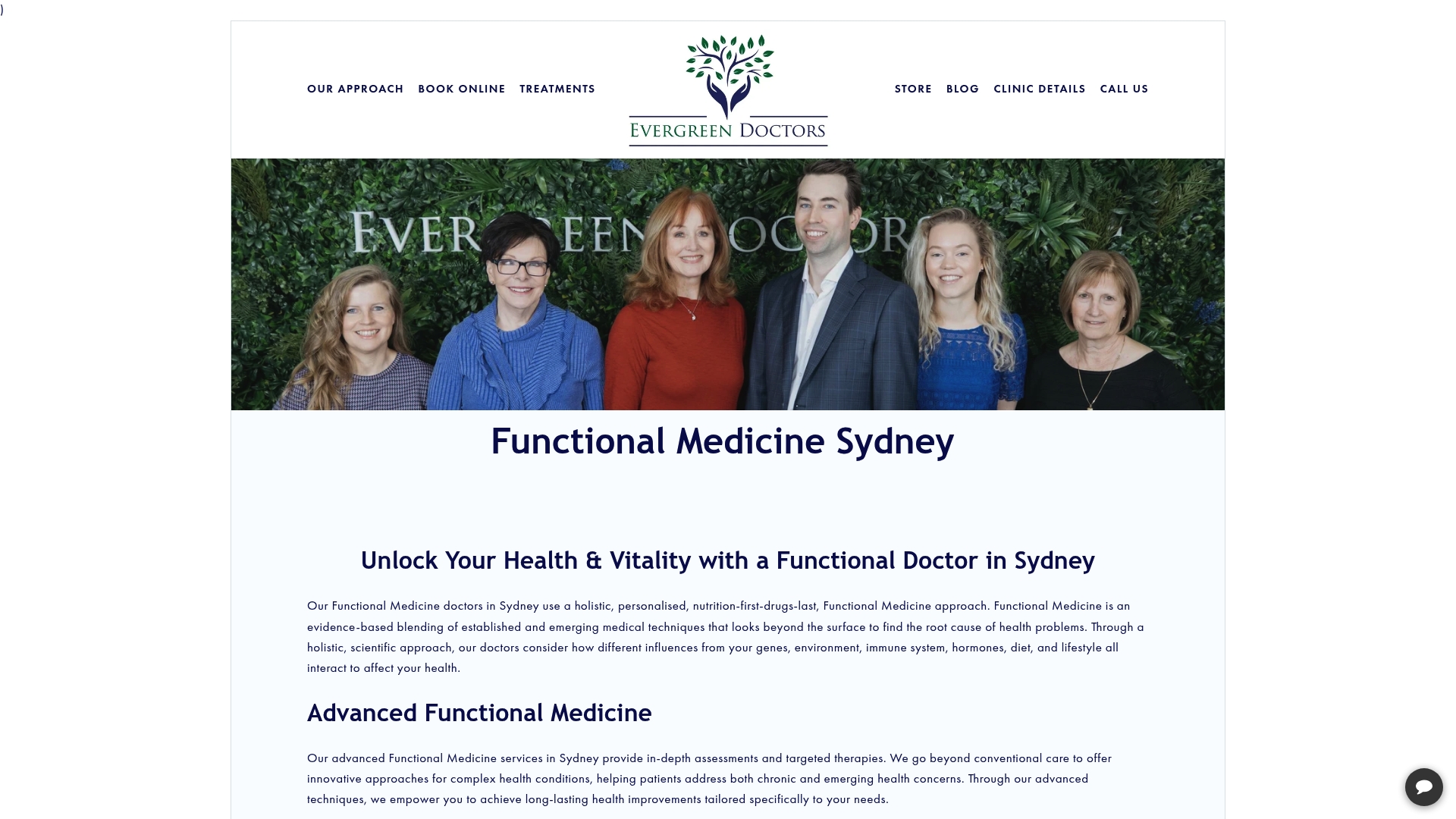
Evergreen Doctors is an integrative functional medicine practice based in Sydney, with clinic locations across Australia and telehealth consultations available nationwide. Their practitioners conduct thorough assessments covering genomics, metabolic markers, gut health, hormonal patterns, and lifestyle factors to develop genuinely personalised nutrition and treatment plans. Whether you are dealing with unexplained fatigue, metabolic challenges, hormonal shifts, or a chronic condition that has not responded to standard care, their evidence-based approach works from root cause to resolution. Reach out to book a comprehensive initial consultation and start building a plan built for your biology, not an average.
FAQ
What are some examples of precision nutrition in functional medicine?
Practical precision nutrition functional medicine examples include genomics-informed nutrition for postmenopausal symptoms, multi-omics dietary advice targeting insulin resistance, therapeutic elimination diets for gut health, and AI-assisted protocol development for complex multi-system presentations.
How does precision nutrition work differently from standard dietary advice?
Precision nutrition uses individual biomarker data, genomic profiling, and metabolic phenotyping to tailor dietary interventions rather than applying population-level guidelines. This produces measurably better outcomes in markers like HbA1c, BMI, and liver function at six months compared to generic recommendations.
What is a functional medicine diet example for gut issues?
Common functional medicine diet examples for gut concerns include the low-FODMAP protocol, the autoimmune protocol (AIP) diet, and structured elimination and reintroduction phases. These are used as temporary diagnostic and therapeutic tools, not permanent restrictions, to calm inflammation and identify food triggers.
Can AI really improve personalised nutrition outcomes?
AI assists functional medicine practitioners by analysing complex intake and biomarker data, generating protocol frameworks, and identifying early risk patterns. Its greatest value is in pattern recognition and administrative efficiency, which frees clinicians to focus on therapeutic dialogue and plan refinement.
Do I need genetic testing to benefit from functional medicine nutrition?
No. Many patients benefit significantly from a comprehensive functional medicine intake, targeted dietary intervention, and basic biomarker testing alone. Genomic testing adds another layer of precision for complex or treatment-resistant cases but is not a prerequisite for meaningful personalised nutrition strategies.