
Functional medicine addresses sleep by targeting the underlying physiological causes of disrupted rest, including HPA axis dysregulation, gut-brain imbalances, and immune system dysfunction, rather than masking symptoms with sedatives or generic sleep hygiene advice. Where conventional medicine asks “how do we get you to sleep tonight?”, functional medicine asks “why aren’t you sleeping?” This distinction matters enormously for the millions of Australians who lie awake exhausted yet wired, who wake at 3am with a racing mind, or who sleep eight hours and still feel depleted. The personalised treatment approach used by practitioners like Evergreendoctors maps your individual biology before recommending a single intervention.
Why functional medicine addresses sleep differently from conventional care
Conventional sleep medicine typically offers two tools: cognitive behavioural therapy for insomnia (CBT-I) or pharmaceutical sleep aids. Both have genuine value, but neither investigates why your nervous system refuses to downregulate at night. Functional medicine fills that gap by treating sleep as a whole-body signal rather than an isolated symptom.
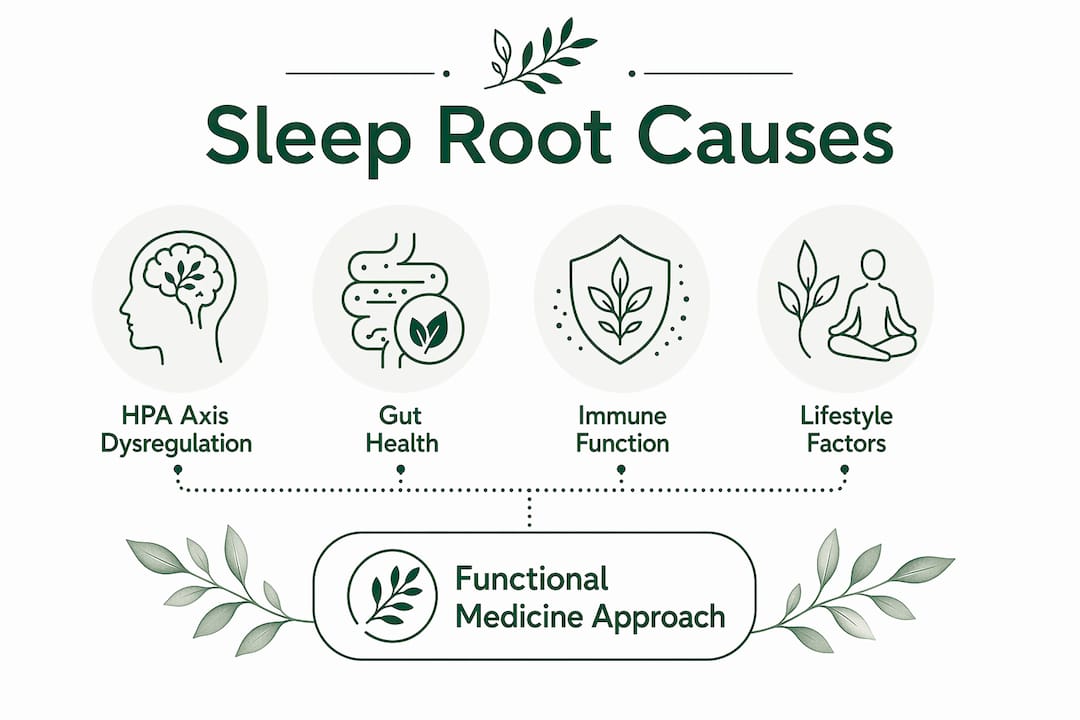
The three biological systems most commonly implicated in chronic sleep disruption are the HPA (hypothalamic-pituitary-adrenal) axis, the gut-brain axis, and the immune-inflammatory system. Each can independently wreck your sleep. In most patients with persistent insomnia, all three are involved to some degree. Functional medicine practitioners assess all three simultaneously, which is why the outcomes differ from single-system approaches.

Standard sleep hygiene practices alone do not correct HPA axis-driven insomnia because elevated evening cortisol biologically suppresses melatonin production. Telling someone to “put their phone away at 9pm” when their cortisol is spiking at midnight is like adjusting the thermostat in a house with a broken furnace. The environment changes; the core problem does not.
How does HPA axis dysregulation affect sleep?
The HPA axis governs your cortisol rhythm, which should peak sharply in the morning and taper to near-zero by late evening. When this rhythm inverts or flattens, the result is the “tired but wired” state that many people with chronic insomnia know intimately. You feel physically exhausted but mentally alert, unable to switch off despite genuine fatigue.
A meta-analysis across 20 studies and over 800 participants confirms that chronic insomnia is strongly linked to elevated 24-hour cortisol, particularly in the evening. This creates a self-reinforcing cycle: poor sleep raises cortisol, and elevated cortisol prevents sleep. Functional medicine breaks this cycle by first measuring it accurately.
One method of gaining insight into this complex picture is the DUTCH (Dried Urine Test for Comprehensive Hormones) test, which maps cortisol output across four to five time points throughout the day. This diurnal cortisol curve reveals whether your problem is morning cortisol deficiency, evening cortisol excess, or a flat pattern indicating adrenal exhaustion. Each pattern requires a different intervention.
Common functional medicine interventions for HPA axis dysregulation include:
-
Phosphatidylserine (400mg before bed): reduces evening cortisol and supports melatonin onset
-
Ashwagandha (KSM-66 extract): an adaptogen that modulates cortisol response under chronic stress
-
Morning light exposure: within 30 minutes of waking to anchor circadian rhythms and set melatonin timing
-
Temperature regulation: a warm bath 90 minutes before bed triggers the core body temperature drop that signals sleep onset
-
Cortisol-lowering protocols: targeted breathwork, progressive muscle relaxation, and structured wind-down routines
Pro Tip: If you have tried melatonin supplements without success, the reason is likely cortisol. Melatonin alone is often ineffective when evening cortisol remains elevated, because cortisol actively blocks melatonin receptors. Lowering cortisol first is the prerequisite step.
What is the connection between gut health and sleep quality?
Most people are surprised to learn that the gut produces over 400 times more melatonin than the pineal gland. The pineal gland gets all the attention in sleep science, but the enteric nervous system is the dominant melatonin producer in the body. When gut inflammation or dysbiosis impairs these melatonin pathways, sleep quality deteriorates regardless of what you do at bedtime.
The gut-brain axis operates bidirectionally through the vagus nerve, the immune system, and neurotransmitter production. Approximately 90% of the body’s serotonin, the precursor to melatonin, is synthesised in the gut. Gut microbiota dysbiosis contributes to insomnia via disrupted neurotransmission, systemic inflammation, and circadian rhythm imbalance. This means a compromised microbiome is not just a digestive problem. It is a sleep problem.
The gut-brain connection and its impact on sleep follows a recognisable sequence:
-
Dysbiosis develops from antibiotics, ultra-processed food, chronic stress, or alcohol
-
Intestinal permeability increases, allowing bacterial endotoxins into systemic circulation
-
Neuroinflammation rises, disrupting serotonin and melatonin synthesis
-
Circadian rhythm signals weaken, making it harder to fall asleep and stay asleep
-
Poor sleep worsens gut permeability, completing the cycle
“Gut microbiota modulation is a promising path for precise, non-pharmacological insomnia treatment, but it requires personalised clinical protocols rather than generic probiotic recommendations.” — Interplay between gut microbiota and insomnia
Functional medicine practitioners address this through targeted probiotics and prebiotics based on stool microbiome analysis, dietary strategies that feed beneficial bacteria (fermented foods, diverse plant fibre), and elimination of inflammatory triggers. The gut-brain connection is not a fringe concept. It is now a primary target in evidence-based insomnia care.
How does immune function influence sleep quality?
Sleep and immune function are not separate systems that occasionally interact. They are deeply co-regulated. Poor sleep worsens inflammation and autoimmunity, while active immune states disrupt sleep architecture. This bidirectional relationship means treating one without the other produces incomplete results.
Cytokines, the signalling proteins of the immune system, directly modulate sleep-wake cycles. Pro-inflammatory cytokines like IL-6, TNF-alpha, and CRP rise with sleep deprivation and simultaneously promote the kind of light, fragmented sleep that fails to restore the body. Individuals with autoimmune conditions commonly report disturbed sleep as one of their most debilitating symptoms, and functional medicine treats this as a clinical priority rather than a secondary complaint.
| Immune marker | Effect on sleep | Functional medicine response |
|---|---|---|
| Elevated IL-6 | Increases sleep fragmentation and reduces deep sleep | Anti-inflammatory dietary protocols, omega-3 supplementation |
| High CRP | Associated with non-restorative sleep and fatigue | Gut repair, stress reduction, targeted nutrition |
| TNF-alpha excess | Promotes excessive daytime sleepiness, disrupts sleep architecture | Immune modulation, elimination of dietary triggers |
| Low-grade neuroinflammation | Impairs melatonin synthesis and circadian signalling | Gut-brain axis support, antioxidant-rich nutrition |
Research shows that CBT-I reduces inflammatory cytokines including CRP, IL-6, and TNF-alpha, confirming that sleep improvement directly benefits immune regulation. Functional medicine builds on this by addressing the immune drivers of sleep disruption at the same time, rather than sequentially. For patients with autoimmune conditions, this integrated approach is not optional. It is the only approach that produces lasting change.
Pro Tip: If your sleep worsens during illness, allergy season, or periods of high stress, immune-driven sleep disruption is likely a factor. Ask your practitioner about inflammatory marker testing alongside a sleep assessment.
How does functional medicine differ from conventional sleep treatments?
The core difference is the starting point. Conventional sleep medicine begins with the symptom and works backwards. Functional medicine begins with the individual’s biology and works forwards.
| Conventional approach | Functional medicine approach |
|---|---|
| Prescribes sleep aids or CBT-I as first-line treatment | Maps cortisol rhythm, gut microbiome, and inflammatory markers before intervening |
| Treats insomnia as a standalone condition | Treats insomnia as a signal of systemic imbalance |
| One-size-fits-all protocols | Personalised protocols based on individual physiology |
| Short-term symptom relief focus | Long-term biological restoration |
| Limited follow-up and adjustment | Ongoing monitoring and protocol refinement |
Treating insomnia without addressing HPA axis dysregulation leaves many high-achieving patients stuck despite excellent sleep hygiene. This is one of the most common patterns seen in functional medicine practice: a patient who does everything right, follows every sleep hygiene rule, and still cannot sleep. The missing variable is almost always physiological, not behavioural.
The benefits of functional medicine for sleep extend beyond the bedroom. When cortisol rhythms normalise, energy, mood, and cognitive function improve. When gut health is restored, digestion, immunity, and mental clarity follow. Sleep is the entry point, but the improvements are systemic.
What practical steps underpin functional medicine sleep solutions?
Functional medicine sleep protocols are built on measurable, physiology-based interventions rather than generic lifestyle advice. The following sequence reflects how practitioners at Evergreendoctors approach sleep restoration:
-
Anchor your circadian rhythm with morning light: Get outside or sit near a bright window within 30 minutes of waking. This single habit sets melatonin timing for the entire day.
-
Regulate core body temperature: A warm shower or bath 60 to 90 minutes before bed initiates the core temperature drop that triggers sleep onset. Keep your bedroom below 19 degrees Celsius.
-
Support gut health through diet: Prioritise fermented foods (yoghurt, kefir, sauerkraut), diverse plant fibre, and reduce ultra-processed food that feeds dysbiosis.
-
Target the HPA axis with adaptogens: Ashwagandha and phosphatidylserine are the most evidence-supported options for evening cortisol reduction. Use only after confirming elevated evening cortisol via DUTCH testing.
-
Practise structured stress reduction: Techniques like box breathing, yoga nidra, or progressive muscle relaxation directly lower HPA axis activity when practised consistently before bed.
-
Reduce inflammatory dietary triggers: Gluten, refined sugar, and alcohol all elevate inflammatory cytokines that disrupt sleep architecture. Removing them is often the fastest route to improved sleep depth.
Pro Tip: Do not start with supplements. Start with light, temperature, and food. These three levers cost nothing and address the circadian, thermal, and inflammatory drivers of poor sleep simultaneously. Supplements fill gaps that lifestyle cannot close.
Key takeaways
Functional medicine improves sleep by correcting the underlying biological dysfunctions, specifically HPA axis dysregulation, gut microbiome imbalance, and immune-inflammatory disruption, that conventional sleep care does not assess or treat.
| Point | Details |
|---|---|
| HPA axis is the primary driver | Elevated evening cortisol suppresses melatonin and must be measured with DUTCH testing before treating. |
| Gut produces most melatonin | Gut dysbiosis impairs melatonin pathways; microbiome repair is a direct sleep intervention. |
| Immune function co-regulates sleep | Inflammatory cytokines fragment sleep; treating inflammation and insomnia together produces better outcomes. |
| Melatonin supplements often fail | Cortisol blocks melatonin receptors; lowering cortisol is the prerequisite to effective melatonin support. |
| Lifestyle precedes supplements | Morning light, temperature regulation, and anti-inflammatory nutrition address root causes before pharmacological support. |
Why I believe sleep is where functional medicine proves its worth
I have worked with patients who arrive carrying sleep diaries, melatonin bottles, and years of frustration. They have tried everything the internet recommends. They have blackout curtains, magnesium glycinate, and a bedtime routine that would impress a sleep researcher. And they still cannot sleep.
What the standard advice misses is that sleep is a downstream outcome. It reflects the state of your stress response, your gut, and your immune system and more. When those systems are dysregulated, no amount of behavioural adjustment will fully compensate. The biology overrides the behaviour.
What I find most telling is how quickly patients improve once we address the actual physiology. A patient with elevated evening cortisol who starts phosphatidylserine and morning light exposure often reports meaningful change within two to three weeks, not months. A patient with gut dysbiosis who removes inflammatory foods and adds targeted probiotics frequently notices deeper, more restorative sleep as a side effect of gut repair. These are not coincidences. They are predictable outcomes of treating the right system.
The uncomfortable truth about sleep advice is that most of it is correct but incomplete. Sleep hygiene matters. CBT-I works. But for patients with physiological drivers, these tools are necessary and insufficient. The functional medicine model does not replace them. It completes them.
If you have been doing everything right and still sleeping badly, the answer is not more discipline. It is better assessment.
— Annie
Ready to find the root cause of your sleep issues?
If you recognise yourself in the patterns described here, a functional medicine assessment is the logical next step. Evergreendoctors offers comprehensive functional medicine consultations across Sydney, Newcastle, the Sunshine Coast, and via telehealth, giving you access to expert care regardless of where you live in Australia.

Each consultation includes personalised assessment of your cortisol rhythm, gut health markers, and inflammatory status, the three systems most commonly driving chronic sleep disruption. Rather than receiving a generic sleep plan, you receive a protocol built around your specific biology. Evergreendoctors also offers telehealth consultations for patients who prefer to start from home. Book your initial consultation and find out what your sleep is actually telling you.
FAQ
What does functional medicine test for when assessing sleep issues?
Functional medicine practitioners typically assess diurnal cortisol patterns using DUTCH testing, gut microbiome composition, and inflammatory markers including CRP, IL-6, and TNF-alpha. These tests identify the physiological drivers of insomnia that standard blood panels do not capture.
Why doesn’t melatonin work for everyone?
Melatonin supplementation is often ineffective when evening cortisol remains elevated, because cortisol actively blocks melatonin receptors at the cellular level. Functional medicine addresses cortisol dysregulation first before considering melatonin support.
How is functional medicine for insomnia different from seeing a sleep specialist?
A sleep specialist typically focuses on sleep architecture and behaviour, using CBT-I or pharmaceutical aids as primary tools. Functional medicine evaluates the hormonal, gut, and immune systems that regulate sleep biology, offering a complementary and often more complete picture for patients with persistent insomnia.
Can gut health really affect how well I sleep?
The gut produces over 400 times more melatonin than the pineal gland, and gut dysbiosis disrupts both melatonin production and serotonin synthesis. Repairing gut health through dietary changes and targeted probiotics is a direct and evidence-supported strategy for improving sleep quality.
How long does it take to see results with functional medicine sleep treatment?
Results vary depending on the underlying cause, but patients addressing HPA axis dysregulation or gut inflammation often report noticeable improvement within two to six weeks of targeted intervention. Functional medicine protocols are adjusted over time based on retesting and clinical response.