
Functional nutrition is defined as a systems-based, personalised approach that identifies nutritional imbalances driving chronic disease and uses targeted dietary therapies to address root causes rather than suppress symptoms. The role of nutrition in functional medicine extends well beyond macronutrient ratios or calorie targets. It operates as a therapeutic tool shaped by your individual biology, gut microbiome, metabolic profile, and lifestyle. The Institute for Functional Medicine (IFM) frames food as medicine, prioritising nutrient-dense, plant-forward eating patterns that modulate inflammation, hormonal balance, and gut function. For anyone managing a chronic condition, understanding this framework is the difference between chasing symptom relief and achieving genuine, lasting recovery.
How does functional medicine use nutrition to address chronic disease?
Functional medicine treats nutrition as a primary clinical intervention, not a lifestyle afterthought. Nutrition targets multiple drivers of chronic disease simultaneously, including systemic inflammation, blood sugar instability, hormonal dysregulation, and gut barrier dysfunction. This is the core distinction from conventional care, where diet advice typically arrives as a one-page handout after a diagnosis.
The mechanisms are specific and well-documented. Dietary patterns rich in omega-3 fatty acids, polyphenols, and fermentable fibre reduce pro-inflammatory cytokine activity and support immune modulation. Anti-inflammatory eating patterns such as the Mediterranean diet and plant-forward protocols have demonstrated measurable reductions in markers like C-reactive protein and interleukin-6. For people with hormonal imbalances, targeted nutritional strategies that stabilise blood glucose and support liver detoxification pathways directly influence oestrogen metabolism and cortisol regulation.

Gut health sits at the centre of functional medicine nutrition therapy. A 2025 systematic review in the Journal of Translational Medicine confirmed that whole-diet interventions including Mediterranean, ketogenic, and Low FODMAP protocols significantly alter gut microbiota composition and function. This provides a clear biological pathway connecting what you eat to chronic disease outcomes, including metabolic and autoimmune conditions.
Key nutritional mechanisms targeted in functional medicine include:
-
Inflammation modulation: Omega-3 sources (oily fish, flaxseed, walnuts) and colourful phytonutrients reduce systemic inflammatory load
-
Blood sugar regulation: Adequate fibre, quality protein, and healthy fats slow glucose absorption and reduce insulin spikes
-
Gut microbiome support: Prebiotic fibre, fermented foods, and polyphenol-rich plants diversify and strengthen microbial communities
-
Hormonal balance: Cruciferous vegetables, lignans, and reduced ultra-processed food intake support oestrogen clearance and adrenal function
-
Nutrient repletion: Targeted micronutrients such as magnesium, zinc, and vitamin D address deficiencies that underpin fatigue, immune dysfunction, and mood disorders
Pro Tip: If you are managing a chronic condition, ask your practitioner to assess your nutrient status through functional testing before making dietary changes. Correcting a magnesium or vitamin D deficiency can shift your response to dietary interventions dramatically.
What does the evidence say about personalised nutrition and the gut microbiome?
The most compelling recent evidence for functional medicine dietary guidelines comes from research integrating gut microbiome data with clinical nutrition outcomes. This is where the science has moved well beyond generic dietary advice.
A landmark 2025 Nature Communications trial involving 802 adults with prediabetes found that dietary fibre improved glycaemic control in only two of four identified metabolic clusters. The benefit was mediated by specific gut microbial changes and serum metabolite shifts. This is a pivotal finding. It means that the same high-fibre diet prescription can produce meaningful improvement in one person and no measurable effect in another, depending entirely on their baseline microbiome composition.
“Personalised nutrition guided by gut microbiome clustering can distinguish responders and non-responders to dietary fibre, illustrating the limits of uniform diet prescriptions.” — Nature Communications, 2025
This research directly underpins the functional medicine rationale for personalised nutrition approaches over population-level dietary guidelines. The IFM and clinicians trained in functional nutrition have long argued that individual biological variation makes one-size-fits-all diets clinically inadequate for chronic disease management.
The field has advanced further with multiomic integration. A 2026 narrative synthesis in the Journal of Translational Medicine reported that combining genomic, metabolomic, and microbiome data improves disease risk classification and allows nutrition plans to outperform traditional Mediterranean diet protocols in glycaemic and lipid outcomes for cardiometabolic conditions. This means that practitioners who integrate biomarker data into dietary planning are achieving results that standard dietary advice cannot replicate.
| Research finding | Clinical implication |
|---|---|
| Fibre response varies by microbiome cluster (Nature Communications, 2025) | Personalised fibre prescriptions outperform uniform high-fibre recommendations |
| Whole-diet interventions alter gut microbiota composition (Journal of Translational Medicine, 2025) | Diet is a primary tool for modifying the microbiome in chronic disease |
| Multiomic integration improves glycaemic and lipid outcomes (Journal of Translational Medicine, 2026) | Biomarker-guided nutrition plans exceed standard dietary protocols in cardiometabolic disease |
The practical challenge is that multiomic testing remains expensive and not yet universally accessible in clinical settings. However, functional medicine practitioners can approximate personalised nutrition by combining detailed clinical history, functional lab testing, and dietary assessment to identify the most relevant biological drivers for each patient.
How do functional medicine nutrition plans differ from conventional diets?
The difference between functional medicine nutrition and a conventional diet plan is not just philosophical. It is structural and clinical.
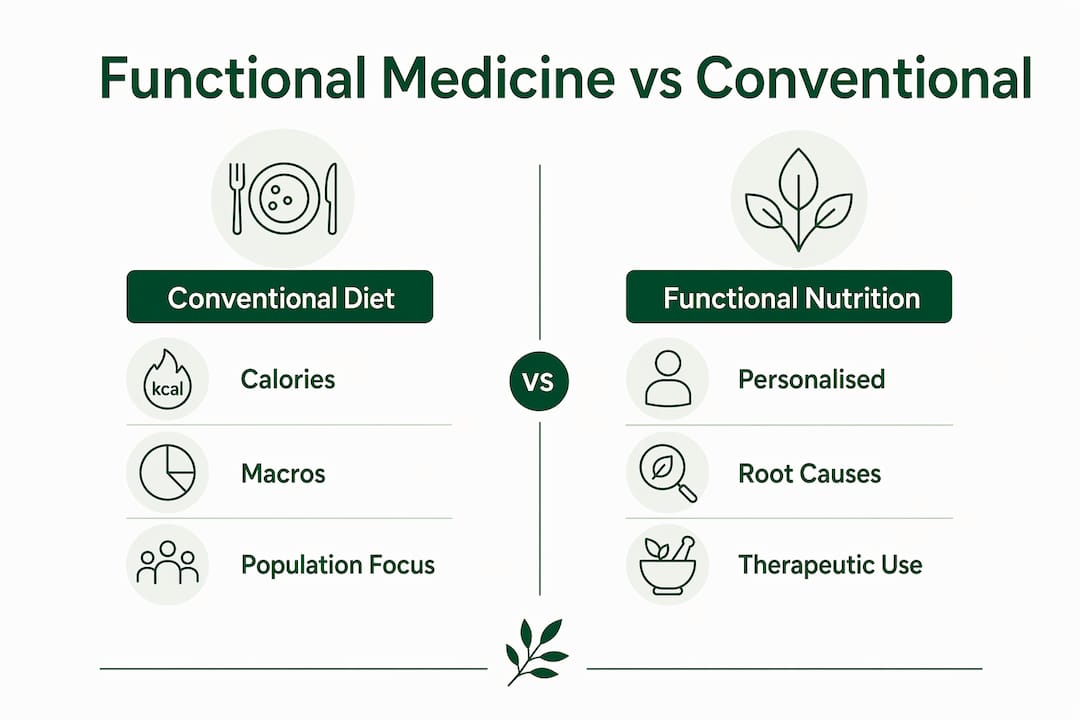
Conventional diets focus on macronutrients and calorie targets, applying population-level guidelines to individuals regardless of their metabolic phenotype, gut microbiome state, or underlying health drivers. Functional medicine nutrition is built on systems biology. It asks why your body is responding the way it is, then uses dietary intervention as a targeted therapeutic response to that specific answer.
| Feature | Conventional diet | Functional medicine nutrition |
|---|---|---|
| Primary focus | Calories and macronutrients | Root causes and biological drivers |
| Personalisation | Population-level guidelines | Individual biology, microbiome, and lifestyle |
| Duration | Often lifelong restriction | Time-limited, hypothesis-driven protocols |
| Assessment basis | Weight and BMI | Functional labs, microbiome, metabolic markers |
| Goal | Weight management or symptom control | Systemic health restoration |
Therapeutic diets in functional medicine are often time-limited and hypothesis-driven. The Low FODMAP elimination protocol, for example, is not intended as a permanent diet. It is a structured investigation to identify whether fermentable carbohydrates are driving gut symptoms, followed by a systematic reintroduction phase to clarify individual tolerances. This approach generates clinical information that a standard low-calorie diet never could.
Functional medicine also integrates the role of lifestyle in functional medicine alongside nutrition. Sleep quality, stress load, physical activity, and environmental exposures all influence how your body responds to dietary interventions. A nutrition plan that ignores chronic sleep deprivation or high cortisol output will consistently underperform, regardless of how nutrient-dense the food choices are.
Pro Tip: Before starting any elimination diet, work with a practitioner who can guide the reintroduction phase. The reintroduction is where the clinical value lies. Skipping it leaves you with unnecessary food restrictions and no useful data.
What practical nutrition strategies does functional medicine use for healing?
Functional medicine nutrition therapy translates research into specific, actionable dietary patterns. The foundation is whole, minimally processed food that delivers nutrient density rather than caloric volume.
The core dietary priorities are:
-
Colourful plant foods: Aim for eight to ten serves of vegetables and fruits daily, prioritising variety across colour groups to maximise phytonutrient diversity. Each colour group delivers distinct polyphenols and antioxidants that target different inflammatory pathways.
-
Omega-3 rich foods: Oily fish (salmon, sardines, mackerel), walnuts, and ground flaxseed provide EPA and DHA that directly reduce inflammatory signalling. These are among the most evidence-backed dietary components for chronic disease management.
-
Fermentable fibre: Legumes, oats, Jerusalem artichokes, and green bananas feed beneficial gut bacteria. Fibre’s effect on gut microbiota is one of the most replicated findings in nutritional science.
-
Quality protein: Adequate protein at each meal stabilises blood glucose, supports tissue repair, and provides amino acid precursors for neurotransmitter synthesis. Functional medicine practitioners typically recommend 1.2 to 1.6 grams per kilogram of body weight for adults managing chronic conditions.
-
Healthy fats: Extra virgin olive oil, avocado, and nuts support cell membrane integrity, fat-soluble nutrient absorption, and anti-inflammatory signalling.
Beyond food selection, functional medicine addresses how and when you eat. A practical approach to healing through diet follows this sequence:
-
Remove ultra-processed foods, refined sugars, and identified trigger foods that drive inflammation or gut irritation
-
Replace with nutrient-dense whole foods that support the specific biological systems under stress
-
Repair gut barrier function using targeted nutrients such as L-glutamine, zinc carnosine, and prebiotic fibre
-
Rebalance the microbiome through fermented foods (kefir, kimchi, sauerkraut) and diverse plant intake
-
Retain improvements through gradual, sustainable dietary habits rather than rigid protocols
Hydration is consistently underestimated in functional medicine dietary guidelines. Adequate water intake supports lymphatic drainage, kidney filtration of metabolic waste, and mucosal gut barrier integrity. Meal timing also matters. Eating within a consistent daily window and avoiding large meals late at night supports circadian alignment of metabolic processes, particularly insulin sensitivity and cortisol rhythm.
Key takeaways
Nutrition in functional medicine works because it targets the specific biological drivers of chronic disease through personalised, evidence-guided dietary interventions rather than generic population-level advice.
| Point | Details |
|---|---|
| Nutrition as therapy | Functional medicine uses diet to address inflammation, gut dysfunction, hormonal imbalance, and blood sugar instability at their root. |
| Personalisation is non-negotiable | Gut microbiome state, metabolic phenotype, and individual biology determine which dietary interventions will actually work for you. |
| Evidence from clinical trials | The 2025 Nature Communications prediabetes trial confirmed that fibre response depends on microbiome cluster, not uniform prescription. |
| Functional vs conventional diets | Functional nutrition uses time-limited, hypothesis-driven protocols informed by biomarker data, not calorie targets or BMI. |
| Practical dietary priorities | Colourful plants, omega-3 sources, fermentable fibre, quality protein, and healthy fats form the foundation of functional medicine eating patterns. |
Why most diets fail and what functional medicine does differently
After years of working with patients managing chronic conditions, the pattern I see most often is this: people have tried multiple diets, experienced short-term improvement, and then plateaued or regressed. The diet was not the problem. The lack of personalisation was.
Standard dietary advice, even well-intentioned advice from qualified professionals, is built on population averages. The 2025 Nature Communications fibre trial made this concrete. Two people with prediabetes following identical high-fibre diets can have opposite glycaemic responses based entirely on their gut microbiome composition. That is not a minor variation. That is a fundamental argument against uniform diet prescriptions for chronic disease.
What I find genuinely exciting about the direction of functional medicine principles is the integration of multiomic data into clinical nutrition. The 2026 Journal of Translational Medicine synthesis showing microbiome-informed plans outperforming standard Mediterranean diets in cardiometabolic outcomes is the kind of evidence that should shift clinical practice. It is not there yet at scale, but the trajectory is clear.
The uncomfortable truth is that personalised nutrition requires more from both the practitioner and the patient. It requires testing, honest dietary history, and a willingness to treat food as a clinical variable rather than a lifestyle preference. For people with autoimmune and inflammatory conditions, that investment consistently produces outcomes that generic dietary advice cannot match.
My encouragement to anyone reading this: do not wait for a diagnosis to get serious about nutrition. The earlier you understand your individual biological drivers, the more precisely you can use food as a genuine therapeutic tool.
— Annie
Start your personalised nutrition journey with Evergreendoctors
Evergreendoctors in Sydney applies the evidence-based principles outlined in this article to every patient consultation. Their practitioners integrate functional lab testing, microbiome assessment, and detailed clinical history to build nutrition plans that address your specific root causes rather than applying generic dietary templates. Whether you are managing a chronic condition, hormonal imbalance, or metabolic disorder, Evergreendoctors offers both in-clinic and telehealth consultations nationally. If you are ready to move beyond symptom management and understand what your body actually needs, explore personalised functional medicine care at Evergreendoctors.
FAQ
What is the role of nutrition in functional medicine?
Nutrition in functional medicine is a personalised therapeutic strategy that targets the root causes of chronic disease through nutrient-dense dietary interventions rather than generic calorie management. It addresses inflammation, gut dysfunction, hormonal imbalance, and metabolic dysregulation as interconnected biological systems.
How does the gut microbiome affect nutrition in functional medicine?
The gut microbiome determines how your body responds to specific dietary interventions, including fibre and anti-inflammatory foods. A 2025 clinical trial of 802 prediabetic adults confirmed that fibre improved glycaemic control only in participants with specific microbiome profiles, making microbiome assessment central to personalised nutrition planning.
How is functional medicine nutrition different from a standard diet?
Functional medicine nutrition uses time-limited, hypothesis-driven protocols informed by individual biomarker data, unlike conventional diets that apply population-level macronutrient targets. The goal is systemic health restoration, not weight management or symptom suppression.
What foods are commonly used in functional medicine nutrition therapy?
Functional medicine dietary guidelines prioritise colourful plant foods, omega-3 rich sources such as oily fish and walnuts, fermentable fibre from legumes and oats, quality protein, and extra virgin olive oil. Ultra-processed foods and refined sugars are removed as primary inflammatory drivers.
Can functional medicine nutrition help with chronic conditions?
Yes. Functional medicine nutrition therapy targets the specific biological mechanisms driving conditions such as metabolic syndrome, autoimmune disease, hormonal disorders, and gut dysfunction through personalised dietary and lifestyle interventions grounded in clinical evidence.