
Most people who discover functional medicine feel genuinely excited about what it offers. Then real life kicks in. Knowing that gut health, sleep quality, and chronic stress all connect to your long-term wellbeing is one thing. Actually weaving those insights into a Tuesday morning when you are late for work is another matter entirely. If you want to integrate functional medicine into your daily routine in a way that actually lasts, you need a practical system, not a perfect one. This article gives you exactly that: a staged, realistic approach built on daily holistic habits that compound over time.
Table of Contents
-
Integrate functional medicine into your daily routine: the foundations
-
Building your functional medicine daily routine step by step
Key takeaways
| Point | Details |
|---|---|
| Start with foundations first | Prioritise gut health, nutrition, and sleep before adding advanced protocols or supplements. |
| Anchor habits to existing ones | Stacking new behaviours onto routines you already have dramatically improves follow-through. |
| Track patterns, not perfection | Monitor symptoms and lab results every 3 to 6 months to guide adjustments, not to grade yourself. |
| Stages beat simultaneous change | Attempting every intervention at once causes burnout; build in layers for lasting results. |
| Professional support matters | A collaborative care team helps you personalise your plan and stay on track when motivation dips. |
Integrate functional medicine into your daily routine: the foundations
Before you change a single habit, it helps to understand what functional medicine is actually asking of you. At its core, functional medicine addresses root causes rather than suppressing symptoms. It treats the body as an interconnected system and uses personalised, staged interventions to restore balance. You can read more about the 7 core principles underpinning this approach if you want deeper context before starting.
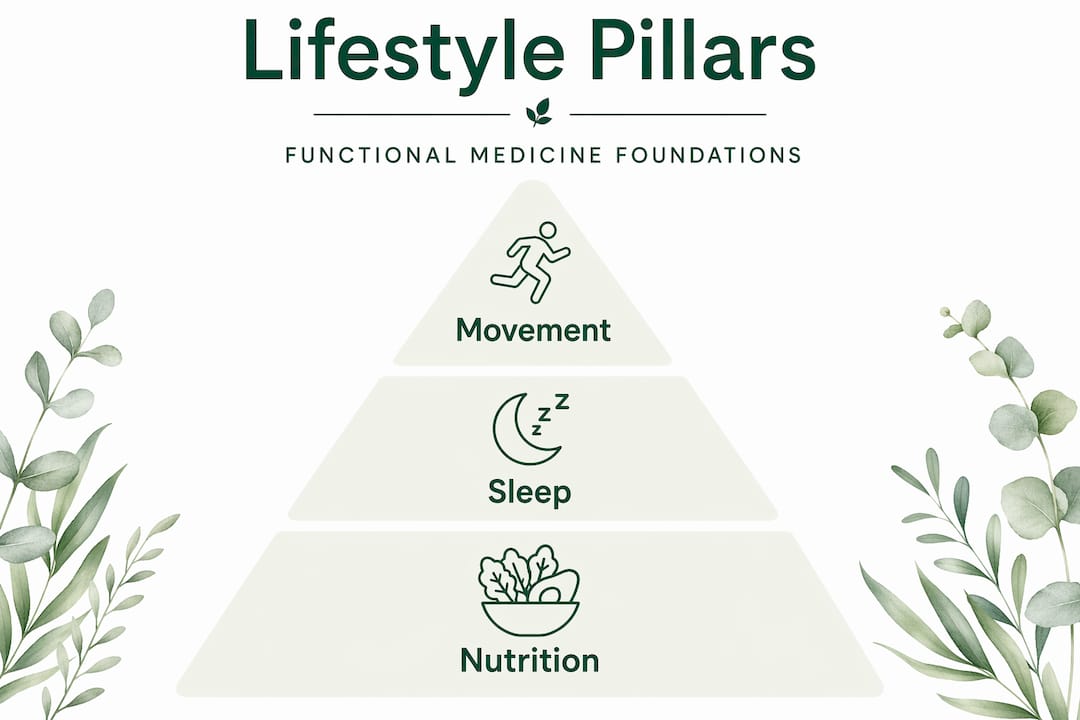
There are four lifestyle pillars every functional medicine plan works within: nutrition, sleep, stress management, and movement. These are not optional extras. Food acts as primary therapy in functional medicine, with evidence-based interventions built around what you eat, how you move, and how well you recover. Getting clear on your baseline across each of these pillars is the first real step.
Here is what a useful starting assessment looks like:
-
Comprehensive health history: Document symptoms, medications, past diagnoses, family history, and major life stressors. This forms the clinical picture your practitioner works from.
-
Lab testing: Baseline bloodwork covering inflammatory markers, thyroid function, blood glucose regulation, nutrient levels, and gut microbiome indicators gives objective data to track against.
-
Symptom journal: A simple daily log of energy, digestion, mood, sleep quality, and pain helps you spot patterns your memory will miss.
-
Lifestyle audit: Rate your current nutrition quality, average sleep duration, weekly movement, and stress levels on a 1 to 10 scale.
| Lifestyle pillar | Why it matters | Simple starting point |
|---|---|---|
| Nutrition | Drives inflammation, hormones, and gut health | Log two days of meals honestly |
| Sleep | Governs repair, cognition, and immune function | Track sleep and wake times for one week |
| Stress | Chronic stress disrupts every body system | Identify your top two daily stressors |
| Movement | Regulates metabolism, mood, and lymphatic flow | Count current active minutes per day |
Pro Tip: Before you see a practitioner, write down your three biggest health complaints and when they started. Patterns that seem unrelated often share a root cause, and this preparation makes your first consultation far more productive.
Collaboration is non-negotiable in this process. Multidisciplinary care involving physicians, dietitians, and health coaches produces better outcomes and better adherence than going it alone. Knowing how to find a qualified practitioner before you invest in labs or supplements will save you time and money.
Building your functional medicine daily routine step by step
The most common mistake people make is trying to implement everything at once. Attempting all interventions simultaneously causes burnout and poor adherence. Instead, build your routine in layers over weeks, not days.
Here is a staged approach that works for most people starting out:
-
Week one and two: anchor your non-negotiables. Choose two or three habits that take under five minutes each. A glass of filtered water before coffee, ten minutes of morning sunlight, and a short breathing exercise before bed are good candidates. Attach each to something you already do automatically. This is habit stacking in practice, and building habits onto existing behaviours is what transforms intention into rhythm.
-
Week three and four: layer in nutrition foundations. You do not need to overhaul your diet in one go. Start by adding one serve of leafy greens per meal, reducing processed sugar at breakfast, and increasing your water intake to at least two litres per day. These changes shift your gut environment meaningfully without requiring a complete lifestyle overhaul.
-
Week five and six: address sleep architecture. Set a consistent wake time first. This single change stabilises your circadian rhythm faster than any sleep supplement. Add a wind-down routine: dim lights 60 minutes before bed, no screens, and a consistent room temperature around 18 to 19 degrees Celsius.
-
Week seven and eight: add movement with purpose. You are not training for an event. You are moving to support lymphatic drainage, insulin sensitivity, and mood regulation. Aim for 30 minutes of moderate-intensity movement five days per week. Walking counts. So does yoga, swimming, or resistance training at your level.
-
Month three onwards: introduce targeted interventions. Once your foundations are stable, this is when you work with your practitioner to add specific protocols. This might include gut repair programmes, targeted supplementation, or hormone-balancing strategies based on your lab results.
Pro Tip: Design your environment to remove friction. Put your water bottle next to the kettle, lay out your walking shoes the night before, and keep your symptom journal on your bedside table. Environmental design does more for daily holistic habits than willpower ever will.
AI-driven habit tracking tools can meaningfully reduce the cognitive load of managing a functional medicine plan. Apps that track symptoms, supplement timing, and lab trends free up mental energy you can spend on actually doing the habits. Telehealth options also make it easier to maintain regular contact with your care team without rearranging your schedule. Explore telehealth in functional medicine if in-person visits are a barrier for you.

Common challenges and how to work through them
Even with the best plan, real life disrupts things. Here is what tends to trip people up, and how to handle it without abandoning your routine entirely.
-
Supplement fatigue: Taking ten supplements daily feels manageable on day one and exhausting by week four. Work with your practitioner to prioritise the two or three with the clearest evidence base for your specific situation. You can always add more once the foundations are embedded.
-
All-or-nothing thinking: Missing your morning routine because you slept in does not mean the day is lost. Resilience comes from not missing the same habit twice in a row, not from a perfect record.
-
Motivation dips: These are predictable, especially around weeks three to five when the novelty has worn off but results are not yet obvious. This is when a health coach or wellness partner becomes genuinely useful. Professional coaching support can provide the external accountability that bridges the motivation gap.
-
Life disruptions: Travel, illness, and family demands will knock your routine around. Plan a “minimum viable day” version of your routine in advance. For most people this means: hydrate, move for ten minutes, and protect sleep. Everything else can flex.
“Wellness rhythms that accommodate life’s disruptions outlast rigid routines by years. The goal is not to maintain a perfect schedule. It is to keep returning to the practices that serve you, no matter what gets in the way.”
Knowing when to seek guidance is as important as the habits themselves. If you are three months in and not seeing any shift in your key symptoms, that is a signal to review your protocol with your practitioner, not to push harder with the same approach.
Measuring progress and adapting over time
Tracking your progress is what separates a functional medicine plan from a wellness experiment. Without measurement, you cannot tell whether something is working or whether you just feel better because the weather changed.
Lab results should be tracked every 3 to 6 months as pattern-recognition data points rather than one-off snapshots. A single result tells you very little. A trend across three or four testing cycles tells you a great deal. The same principle applies to your symptom journal. Look for directional change, not dramatic transformation.
| What to track | How often | What to look for |
|---|---|---|
| Symptom journal | Daily | Trends in energy, digestion, mood, pain |
| Lab markers | Every 3 to 6 months | Direction of change over time |
| Sleep quality | Weekly average | Duration, wake frequency, morning energy |
| Movement consistency | Weekly | Minutes per week, not perfection per day |
| Goal review | Monthly | Progress toward short-term targets |
Set goals at two levels. Short-term goals cover the next four to eight weeks and focus on behavioural consistency. Long-term goals look at three to twelve months and focus on health outcomes. This distinction matters because you cannot control your lab results directly. You can control whether you showed up for your daily habits.
When you notice that a particular habit is consistently slipping, treat it as information rather than failure. Ask whether it is the right intervention for your current season of life, whether it needs a simpler version, or whether your priorities need to shift. Lab data as pattern recognition applies equally to your behavioural data. Everything you are doing is giving you feedback. Learn to read it.
My honest take on making this work long term
Working closely with people navigating functional medicine protocols, the thing I see trip people up most is not complexity. It is the expectation that a good routine should feel effortless from day one. It rarely does.
What I have found is that the people who sustain this longest are not the ones with the most rigorous programmes. They are the ones who chose rhythms they could return to after a bad week. A 20-minute morning routine you do four days out of five beats a two-hour protocol you abandon after a fortnight.
I am also sceptical of the idea that you need to understand every mechanism before you start. You do not need to know exactly how sleep affects cortisol to benefit from going to bed at the same time each night. Start with the behaviour. Understanding deepens as you go.
The other thing worth saying plainly: professional partnership genuinely changes outcomes here. Not because you cannot make progress alone, but because having someone review your data and adjust your plan removes so much guesswork. If you are serious about making functional lifestyle changes that last, investing in that relationship early pays off for years.
— Annie
How Evergreendoctors can support your health journey

If you are ready to move from reading about functional medicine to actually living it, Evergreendoctors makes that transition far more manageable. Their multidisciplinary teams across Sydney, Newcastle, and the Sunshine Coast work with you to build a personalised plan grounded in your health history, not a generic template. For those who prefer flexibility, their telehealth service means expert support is accessible wherever you are. Whether you are managing a chronic condition, trying to optimise energy, or simply want to understand what is actually driving your symptoms, Evergreendoctors pairs clinical rigour with the kind of practical, staged guidance this article has outlined. Book a consultation and start with what matters most.
FAQ
What does it mean to integrate functional medicine daily?
Integrating functional medicine daily means applying its core principles, including nutrition, sleep optimisation, stress management, and targeted supplementation, as consistent habits rather than occasional interventions. The goal is a sustainable wellness rhythm built around your individual health data.
How long before I see results from a functional medicine routine?
Most people notice meaningful changes in energy, digestion, and mood within six to twelve weeks of consistent practice, though lab marker trends typically become clear after three to six months of monitoring.
Do I need a practitioner to start a functional medicine routine?
You can begin with foundational habits like improving sleep, hydration, and nutrition on your own. However, a qualified practitioner is important for interpreting lab results, personalising your protocol, and avoiding the supplement fatigue that comes from unguided self-prescribing.
What are the easiest functional medicine habits to start with?
Drinking filtered water before caffeine, getting ten minutes of morning sunlight, and logging your symptoms daily are low-effort habits that support your circadian rhythm, hydration, and self-awareness without disrupting your existing schedule.
How do I stay consistent when motivation drops?
Anchoring habits to existing behaviours and having a “minimum viable day” routine planned in advance are the two most effective strategies. Consistency over weeks matters far more than perfection on any single day.